TSH 4.5: does it need treatment or monitoring?
A TSH of 4.5 does not automatically mean starting thyroid hormones. Learn why FT4 matters, when the test is repeated, what antibodies and ultrasound add and when treatment is considered.
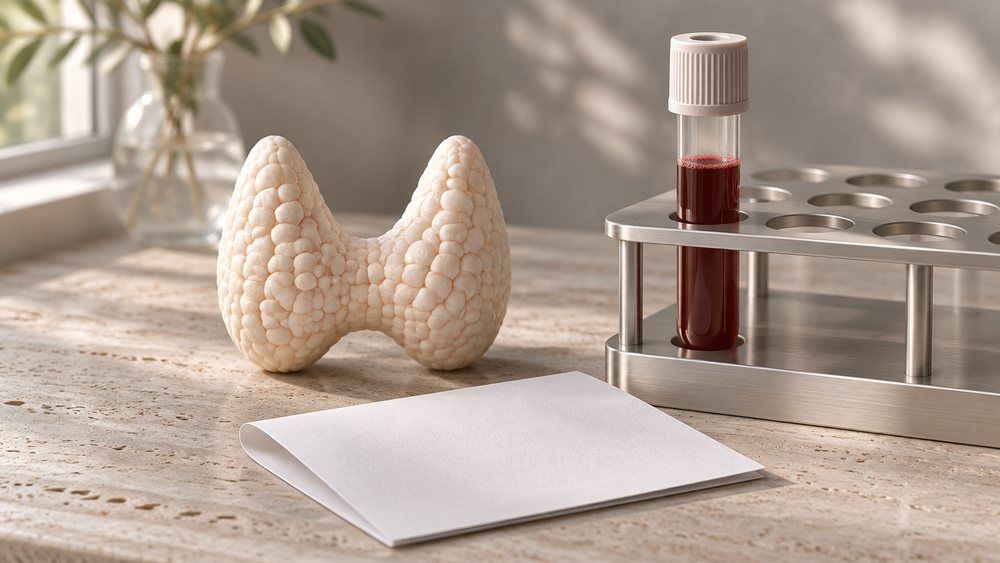
If your TSH is 4.5 mIU/L and that is above your laboratory's reference range, thyroid hormone treatment does not have to start straight away. The decision depends on FT4, the cause of the rise, your symptoms and any pregnancy plans. With a mildly raised TSH, a normal FT4 and no special circumstances, monitoring is often the choice, with the tests repeated after roughly 6–12 weeks.
A result like this is unsettling, especially alongside hair loss, feeling cold, dry skin or weight changes. Below we look at the tests that help a doctor decide, and at why the approach to a slightly raised TSH can differ from one person to the next.
What does TSH measure?
TSH, or thyroid-stimulating hormone, is produced by the pituitary gland and regulates the thyroid. The thyroid in turn produces thyroxine (T4) and triiodothyronine (T3), hormones that influence energy metabolism, body temperature, the heart and the nervous system.
The pituitary and the thyroid work through a feedback loop: when the body is short of thyroid hormones, the pituitary usually releases more TSH. A raised TSH is therefore an important signal for further assessment, but it is not yet a final diagnosis.
Does TSH 4.5 mean hypothyroidism?
TSH alone cannot answer that question: after a raised TSH, the first step is to check FT4, the thyroxine in the blood that is not bound to proteins. The combination of the two results distinguishes between two conditions.
- Subclinical hypothyroidism: TSH is raised and FT4 is normal. The thyroid still produces enough hormone, but only under stronger stimulation from the pituitary.
- Overt primary hypothyroidism: TSH is raised and FT4 is low. The thyroid is not producing enough hormone, and this usually requires replacement therapy.
The same TSH of 4.5 can therefore lead to different plans. Beyond the numbers, the doctor considers your symptoms, medical history and any plans for pregnancy.
Reduced thyroid function can cause feeling cold, dry skin, constipation, hair loss, a slower pulse and lower capacity for work. These symptoms are not specific, though: similar complaints occur with iron deficiency, sleep problems and other conditions. Symptoms are therefore assessed together with test results. How a doctor looks for the cause of such complaints is covered in our article on thyroid function and chronic fatigue.
Why does TSH go up?
One common cause of a persistently raised TSH is autoimmune thyroiditis, also known as Hashimoto's thyroiditis. In this condition the immune system produces antibodies against thyroid tissue, which can affect thyroid function over time.
A raised TSH can also reflect temporary changes after an illness, the effect of certain medicines, problems with iodine intake and other factors. Sometimes a borderline result returns to normal on a repeat test. That is why the cause should be clarified before any decision about treatment.
Which tests help with the decision?
The first step is to look at TSH together with FT4. If TSH is only slightly raised and FT4 is normal, repeating the tests after roughly 6–12 weeks often helps to show whether the change persists.
The doctor may also request antibodies to thyroid peroxidase (anti-TPO) and/or thyroglobulin (anti-Tg). They help estimate the likelihood of an autoimmune process. Positive antibodies alone do not mean that hormone treatment is needed: the decision rests mainly on thyroid function and the overall clinical picture.
In an initial assessment, I also find a thyroid ultrasound useful. It shows the size of the gland, the structure of the tissue, signs of heterogeneity and any nodules or cysts, none of which a blood test can reveal. Ultrasound complements the laboratory picture. If nodules are found, our article on thyroid nodules and cysts explains when they are a concern.
If you also have tiredness, hair loss or weight changes, the doctor may widen the check-up, for example with a full blood count, ferritin and other tests depending on the situation.
When is treatment needed, and when is monitoring enough?
If TSH is raised and FT4 is low, replacement therapy with a thyroid hormone medicine is usually started to make up for the shortfall.
In subclinical hypothyroidism, the decision is individual. When TSH is only mildly raised, FT4 is normal and there are no special circumstances, monitoring with repeat tests is often chosen. When TSH is consistently 10 mIU/L or higher, treatment is considered more actively.
Anti-TPO antibodies help to explain why TSH may have risen and how likely it is to keep rising, but on their own they are not a reason for hormone therapy. The aim of treatment is to replace missing thyroid hormone when that is needed. Lowering antibody levels is not a goal of therapy.
Pregnancy and pregnancy planning call for a separate approach, as the timing of tests and treatment decisions may differ.
What should you avoid after one high TSH result?
Do not start hormone therapy on your own after a single test. Avoid large amounts of iodine or “thyroid support” supplements until the cause of the change has been assessed. And try not to put every symptom down to TSH alone: sometimes several different factors are involved, and each one deserves attention.
How does Longevium Clinic in Dubai approach a raised TSH?
At Longevium Clinic in Dubai, we look at thyroid health as part of the body's wider hormonal and metabolic balance. During a consultation, the doctor weighs symptoms, test results, ultrasound findings if a scan was done, diet and other aspects of health together. This helps to establish when treatment is genuinely needed and when monitoring and repeat tests are enough.
The aim of longevity medicine is to notice changes early, help you feel well and support your health over the long term.
If your TSH is raised and you are unsure what to do next, start with an individual review of your results and a personal monitoring plan. Our Thyroid Check includes a TSH test, a thyroid ultrasound and a consultation with an endocrinologist.