Heart Palpitations: When Do You Need a Holter Monitor?
Skipped beats are often ectopic beats, which also occur in healthy people. When a Holter monitor is needed, how long monitoring should last and which symptoms need urgent care.
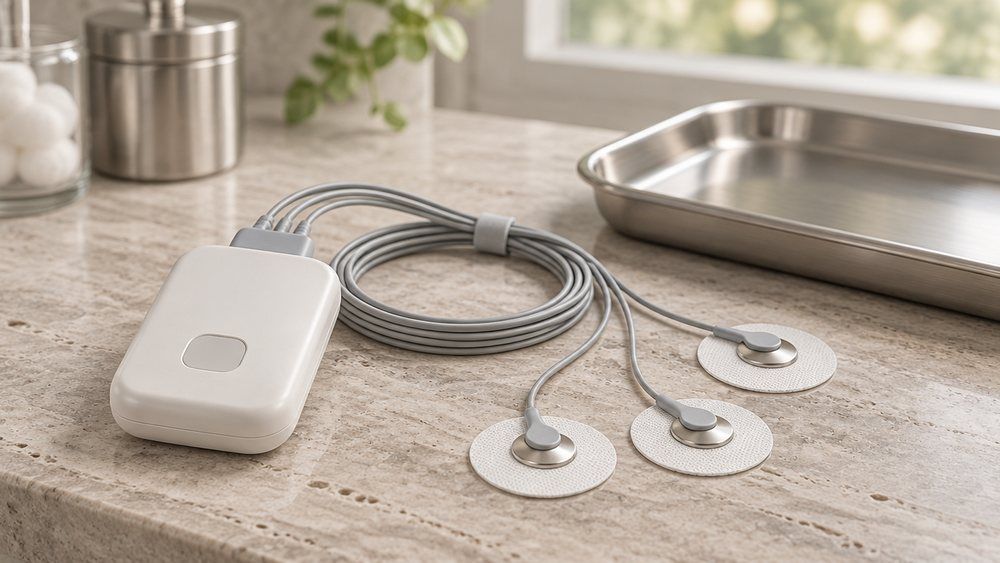
Not everyone who has felt heart palpitations or a skipped beat needs a Holter monitor. When symptoms keep coming back, however, it is important to identify the rhythm behind them, and that requires an ECG recording. The less often the episodes occur, the longer the recording may need to be.
“Doctor, sometimes my heart seems to stop for a moment and then gives a hard thump. Is that dangerous?” Or a different situation: someone is sitting quietly and their heart suddenly starts racing, with no physical exertion at all. These sensations can be frightening, especially the first time, but a racing or pounding heart is by no means always a sign of a dangerous arrhythmia.
What causes a skipped or extra heartbeat?
A common cause of a skipped heartbeat is an ectopic beat, or extrasystole: an extra heart contraction that arrives out of turn. After it, a person may notice a pause followed by a stronger beat.
Ectopic beats also occur in healthy people. Lack of sleep, stress, alcohol, caffeine, overwork and some medicines can make them more likely. Sometimes, though, skipped beats are linked to a heart rhythm disorder that needs further investigation.
What else can cause heart palpitations?
Palpitations can come from several different rhythms, ranging from sinus tachycardia during stress to atrial fibrillation:
- Sinus tachycardia with stress, physical activity, dehydration or anaemia.
- Supraventricular ectopic beats.
- Ventricular ectopic beats.
- Paroxysmal supraventricular tachycardia.
- Atrial fibrillation.
- Other rhythm disorders.
How palpitations feel often does not reveal which rhythm is responsible. To find out, the heart’s electrical activity has to be recorded.
Why is a standard ECG often not enough?
A standard ECG records the heart for only a few seconds. If an arrhythmia comes and goes, the rhythm may be completely normal during the test. This is why ambulatory ECG monitoring, known as a Holter monitor, is used.
24-hour Holter or longer: how long should monitoring last?
How long monitoring should last depends on how often the symptoms occur.
- Daily palpitations. Monitoring usually starts with a 24–48 hour Holter.
- Symptoms several times a week. Longer monitoring, for example 7–14 days, may be useful.
- Rare episodes, every few weeks. A doctor may recommend an event recorder or another method of long-term ECG recording.
The main goal is to capture the heart rhythm at the exact moment the symptoms are felt.
What does a Holter monitor show?
A Holter monitor records all heart activity during the monitoring period and shows:
- Average, minimum and maximum heart rate.
- Whether ectopic beats are present and how many there are.
- Episodes of tachycardia and bradyarrhythmia.
- Pauses in the heart rhythm.
- Atrial fibrillation and other rhythm disorders.
- Whether the symptoms match what the ECG recorded.
Sensations and the recording do not always agree. Someone may feel dozens of skipped beats a day, while the test shows only occasional benign ectopic beats. In other cases a person notices almost nothing, yet monitoring reveals a clinically significant rhythm disorder.
Do ectopic beats always need treatment?
Ectopic beats do not always need treatment. If the heart is structurally healthy, the ectopic beats are infrequent and they do not cause marked symptoms, medication may not be required.
Frequent ventricular ectopic beats, also called PVCs, need closer assessment. This is especially true when they make up around 10% of all heartbeats or more: heart function should then be checked to rule out PVC-induced cardiomyopathy.
The decision depends on the type of arrhythmia, how often it occurs, the symptoms and the condition of the heart. An accurate diagnosis separates benign rhythm changes from conditions that need treatment and helps avoid unnecessary antiarrhythmic medication.
When do palpitations need urgent care rather than a Holter?
Palpitations accompanied by fainting, marked weakness, chest pain, significant breathlessness or a sudden deterioration need urgent medical assessment, not a scheduled test.
Palpitations during exercise deserve particular attention, especially in people with heart disease or a family history of sudden cardiac death. How the heart is assessed before training is covered in our article on sudden cardiac death during exercise.
If there are no warning signs but the palpitations keep recurring, the assessment can be planned. A cardiologist consultation is part of the Longevity Day programme, and the doctor will decide whether a Holter is needed and for how long, based on how often and how the symptoms appear. For a broader look at cardiovascular risk at a younger age, read about heart attack under 50 in the UAE.